In medical treatment processes, patients may often feel vulnerable, uninformed, or unable to prove what was promised to them. This is especially common in aesthetic surgery, dental treatments, implant procedures, hair transplantation, IVF treatment, and health tourism cases.Many patients state that before the procedure, the doctor or clinic made certain promises, minimized the risks, failed to explain possible complications properly, or later changed their explanations after the treatment failed.For this reason, one of the most common questions asked by patients is whether they can record their conversation with their doctor and use this recording as evidence in a medical malpractice lawsuit.The answer is legally sensitive. On one side, the patient has the right to seek justice and preserve evidence. On the other side, the doctor has rights relating to privacy, professional confidentiality, personal data, and freedom of communication.Under Turkish law, privacy of private life, confidentiality of communication, and protection of personal data are
protected both under the Constitution and the Turkish Criminal Code. The most relevant provisions are Article 132 (violation of confidentiality of communication), Article 133 (listening to and recording conversations between persons), Article 134 (violation of privacy of private life), and Article 135 (unlawful recording of personal data).
Can a Patient Record a Doctor Consultation?
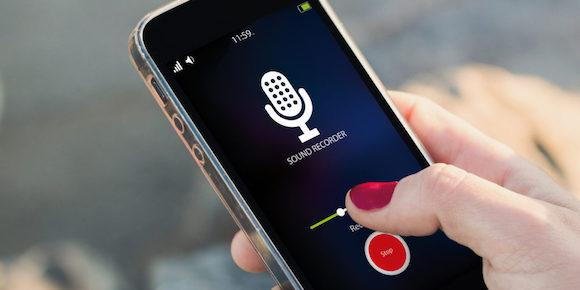
As a general rule, recording another person’s voice without their consent may create legal risks. A consultation between a patient and a doctor is also a professional and confidential communication. Therefore, it is not legally safe for a patient to secretly record every doctor consultation merely because it may be useful later.However, there may be exceptional situations under Turkish law. If the patient believes that they are being subjected to an unlawful act, threat, pressure, misrepresentation, consent obtained under duress, or a situation that cannot otherwise be proven, the recording may be assessed differently.In certain judicial practices, where a person has no other realistic means of obtaining evidence and is faced with a sudden situation, recording the conversation may be considered lawful for the purpose of preserving evidence that would otherwise be lost.However, this exception is not unlimited. The recording must be necessary, proportionate, limited to the purpose of preserving evidence, and must not be shared with third parties or used as a means of pressure.Is a Doctor Audio Recording Always Admissible Evidence?
No — a recording of a conversation with a doctor is not automatically admissible evidence in court.Whether an audio recording can be considered as evidence depends on several factors, including how the recording was obtained, whether the person who made the recording was a party to the conversation, why the recording was made, whether the incident developed suddenly, whether there was any other possibility of obtaining evidence, whether the content relates to private life, whether the recording was shared with third parties, and whether it was used only within a legal process.For this reason, the safest method for patients is to create written evidence whenever possible. Communications with the doctor or clinic through WhatsApp, email, patient forms, consent forms, prescriptions, reports, payment receipts, and treatment plans are generally safer and stronger forms of evidence than secret audio recordings.Is There a Difference Between a Face-to-Face Consultation and a Telephone Call?
Yes — there is a clear legal difference between the two.Telephone calls, WhatsApp calls, video calls, and similar communications may fall within the scope of confidentiality of communication. In such cases, Article 132 of the Turkish Criminal Code may be relevant.Face-to-face conversations, on the other hand, are generally assessed under Articles 133 and 134 of the Turkish Criminal Code. The Court of Cassation has held in certain decisions that when a conversation takes place between twovpeople, the recording of that conversation by one of the parties does not always constitute the offence regulated under Article 133. However, if the legal conditions exist, the act may be evaluated under Article 134 as violation of privacy of private life.The legal risk becomes much greater if the conversation concerns private life, if the recording was planned in advance, or if the recording was later disclosed to others.Is a Doctor’s Voice Personal Data?
Yes. A person’s voice may constitute personal data because it can make that person identifiable. Therefore, recording a doctor’s voice without consent may, depending on the specific circumstances, raise issues relating to unlawful recording of personal data.However, in certain decisions, the Court of Cassation has evaluated the unauthorized recording of images or voices relating to private life under Article 134 of the Turkish Criminal Code, namely violation of privacy of private life. In other words, even though a voice may be personal data, if the recording concerns private life, the provisions regarding privacy of private life may become more relevant.The Most Important Rule for Patients: Do Not Share the Recording
For patients, the greatest legal risk often arises not from the act of recording itself, but from sharing the recording with others.Sending the audio recording to WhatsApp groups, publishing it on Instagram, TikTok, Facebook, YouTube, Google reviews, or sending it to the doctor’s family, other patients, or third parties may result in serious criminal and civil liability.Under Article 134 of the Turkish Criminal Code, unlawfully disclosing images or sounds relating to private life may constitute a separate offence. Disclosure through social media or other publication channels may also be evaluated within this framework.Therefore, if a patient has made an audio recording, they should never share it on social media, never use it to threaten the doctor or clinic, and never use it as a pressure tool. The recording should only be shared with the patient’s lawyer or submitted to competent judicial authorities if legally necessary.What Evidence Is Stronger Than an Audio Recording in a Medical Malpractice Case?
In medical malpractice cases, an audio recording is usually not enough by itself. The strongest evidence generally consists of medical records and written communications.Important evidence may include the treatment contract, payment receipts, invoices, clinic correspondence, WhatsApp messages, email records, pre-operative and post-operative photographs, consent forms, prescriptions, medical reports, radiological images, implant cards, laboratory results, second-opinion reports from independent doctors, revision surgery offers, and a detailed chronological statement prepared by the patient.In health tourism and aesthetic procedure cases, it is particularly important to document the difference between the result promised to the patient and the result actually achieved.In procedures such as aesthetic surgery, dental implants, zirconium crowns, “Hollywood smile” treatments, hair transplantation, and similar interventions, the doctor or clinic may not only be required to exercise medical care, but may also be responsible for the promised result, depending on the nature of the legal relationship.For this reason, an audio recording may sometimes support a case, but the foundation of a strong malpractice claim usually consists of medical documents, photographs, written communications, and expert examination.How Can a Patient Protect Themselves Legally?
A patient who wants to protect themselves should primarily prefer written communication. Questions should be sent to the doctor or clinic by email or WhatsApp, and the patient should ask for the treatment plan, possible risks, materials to be used, costs, revision policy, and expected outcome in writing.For example, the patient should ask the following questions in writing:- What procedure will be performed?
- Which materials will be used?
- What are the risks?
- What are the alternative treatment options?
- If revision is required, who will cover the cost?
- What is the brand of the implant?
- Which doctor will perform the procedure?
- What will happen in case of complications?
- What result is being promised?
Is It Better to Ask for Permission Before Recording?
Yes. The safest method is to ask for clear consent before recording. A patient may simply say:“Doctor, would it be acceptable for me to record this consultation so that I can correctly understand and remember the information you provide?”If the doctor clearly gives permission, the recording becomes much safer from a legal perspective. If the doctor refuses, the patient should not insist. Instead, the patient may send a written summary after the consultation, such as:
“Following our consultation today, I understand that the following procedures will be performed, the following risks were explained, and the following result is being aimed for. If I have misunderstood anything, I kindly ask you to correct me in writing.”This method is more professional and legally safer than a secret recording.